Hey everyone! As an English blog influencer, I’m always looking for those fascinating topics that really make you think, and today, we’re diving deep into something truly monumental that continues to shape our world.
We often talk about “democracy” in our modern lives – in elections, in our rights, in our daily debates – but have you ever stopped to consider where this incredible idea actually began?
I mean, who first thought that people, not kings or gods, should really run things? It’s a concept so ingrained in many of our societies now that it’s easy to take for granted, but its origins are a dramatic tale of societal struggle, brilliant innovation, and a shift in thinking that was truly revolutionary.
Imagine a world where power wasn’t inherited, but *earned* through collective voice. This isn’t just ancient history; it’s a living lesson for us today, especially when we look at current global trends around governance, civic engagement, and even the debates on artificial intelligence’s role in decision-making.
The seeds of our modern political landscape, the very idea of “rule by the people,” were planted over two millennia ago in a place that might surprise you.
It’s a story filled with influential figures like Solon and Cleisthenes, who dared to challenge the status quo and laid the groundwork for a system that, despite its limitations, changed everything.
Their reforms weren’t just about politics; they were about transforming society itself. So, let’s peel back the layers of time and explore the dramatic birth of democracy in ancient Greece.
This wasn’t some quiet academic exercise; it was a societal earthquake! In the bustling city-state of Athens, a series of transformative events and visionary leaders, particularly Cleisthenes around 507 B.C.E., ushered in “demokratia,” meaning “rule by the people.” Before this, Athens was often ruled by aristocrats or even tyrants, with power concentrated in the hands of a few.
But the growing social and economic inequalities led to unrest, paving the way for groundbreaking reforms that empowered ordinary male citizens, giving them a voice in their own governance through assemblies and courts.
This foundational shift, though limited to free adult men, set a precedent for citizen participation and checks on power that echoes through history to our own times.
Let’s uncover the fascinating details of how this revolutionary concept took root and forever changed the course of human society.
The Groundwork: A City on the Brink
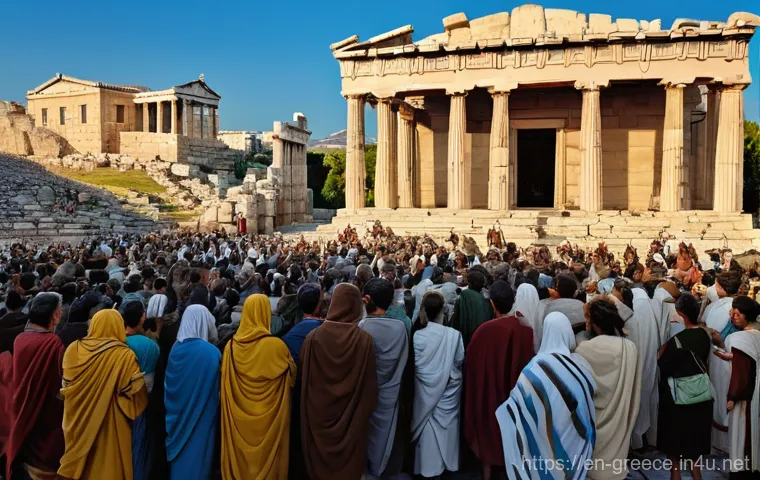
Stepping back in time to ancient Athens, before the grand idea of rule by the people truly took hold, you’d find a city simmering with tension, a place far from the harmonious democracy we often romanticize. It’s hard to imagine now, but Athens wasn’t always this beacon of enlightened governance. In fact, it was often on the verge of chaos, plagued by bitter feuds between powerful aristocratic families and the crushing burden of debt that left many ordinary citizens enslaved. When I think about it, the pressures these people faced must have been immense, a daily struggle for survival overshadowed by the whims of the wealthy elite. It wasn’t just abstract political squabbles; it was about people losing their farms, their families, and their very freedom. This wasn’t some minor inconvenience; it was a societal wound that threatened to tear the fabric of the city-state apart. The air must have been thick with resentment and a longing for something, anything, to change. This era really highlights how desperate things can get when power is too concentrated and the voices of the common folk are utterly ignored. I’ve always felt that significant societal shifts rarely happen without a preceding period of deep unrest, and Athens in the 7th and early 6th centuries B.C.E. is a prime example of this historical truth. The groundwork for radical change was being laid not by design, but by sheer societal desperation.
A Society Divided: The Aristocratic Grip
Before the democratic experiment, Athenian society was rigidly structured, with power firmly concentrated in the hands of a few aristocratic families, known as the Eupatridae. These powerful clans controlled land, held the most influential political offices, and essentially dictated every aspect of public life. Imagine living in a world where your future, your opportunities, and even your basic rights were determined not by your merit or hard work, but solely by the accident of your birth. It must have felt incredibly stifling, a constant reminder of an unbridgeable chasm between the ‘haves’ and the ‘have-nots’. They were the judges, the lawmakers, and the military leaders, often acting in their own self-interest, which, naturally, led to immense dissatisfaction among the growing numbers of commoners. My personal take is that such a system, while perhaps offering a semblance of order for a time, always breeds discontent because it fundamentally denies human agency and aspiration. The lack of social mobility and the inherent unfairness created a powder keg, just waiting for a spark.
The Debt Crisis: A Cry for Reform
One of the most pressing issues fueling this widespread discontent was the catastrophic debt crisis. Many small farmers, struggling with poor harvests or economic downturns, were forced to borrow from the wealthy aristocrats. When they couldn’t repay these loans, the consequences were brutal: they could lose their land, and in the worst cases, they or their family members could be sold into debt slavery. Can you even imagine the terror of knowing that a bad season could mean your children become someone else’s property? It’s a chilling thought that brings home the very real human cost of unchecked economic disparity. This practice, known as *hektemoroi*, or ‘sixth-parters,’ left many Athenians in a precarious state, effectively tied to the land of their creditors. The situation became so dire that it threatened to destabilize the entire state, with widespread calls for land redistribution and the abolition of debt slavery. It’s a powerful reminder that economic justice is often a precursor to political stability, a lesson that, frankly, still resonates in our world today. The cries for reform weren’t just abstract political arguments; they were deeply personal pleas for dignity and survival.
Solon’s Shake-Up: Planting the Seeds of Change
It was into this volatile environment that Solon, an Athenian statesman, stepped forward in 594 B.C.E. with a mandate to resolve the crisis. His reforms were nothing short of a seismic event, often described as laying the critical groundwork for democracy, even though he wasn’t establishing a full democracy himself. I’ve always been fascinated by how leaders emerge during times of extreme difficulty, and Solon really shines as someone who understood the deep-seated grievances of the people. He wasn’t afraid to challenge the status quo, even if it meant upsetting the powerful elite. What he did was provide a much-needed pressure release valve, preventing a full-blown civil war and giving Athens a fighting chance at a more equitable future. His reforms weren’t perfect, and they didn’t satisfy everyone, but they were a crucial first step away from tyranny and toward a system where more voices could be heard. For me, thinking about his impact, it’s clear that sometimes the most profound changes start with a pragmatic, almost reluctant, nudge in the right direction, rather than a full-scale revolution. He truly set the stage for what was to come, creating a climate where even more radical ideas could eventually take root.
Breaking the Chains: Solon’s Economic Reforms
Solon’s most famous and perhaps most impactful reform was the *Seisachtheia*, or “shaking off of burdens.” This audacious act immediately canceled all existing debts, freed those enslaved due to debt, and outlawed debt slavery for the future. Just imagine the sheer relief that must have washed over countless families! It wasn’t just a legal change; it was a profound restoration of human dignity. For many, it meant regaining their freedom and their livelihood, a chance to start fresh without the looming shadow of perpetual servitude. He also bought back Athenians who had been sold into slavery abroad, bringing them home. These measures were incredibly unpopular with the wealthy creditors, who naturally felt cheated, but they were absolutely essential for social cohesion and preventing a total societal collapse. I honestly believe this move alone demonstrates Solon’s deep understanding of the human condition and the absolute necessity of economic justice for political stability. It was a bold, humanitarian stroke that fundamentally reshaped Athenian society.
A New Political Ladder: Class, Not Birthright
Beyond his economic reforms, Solon also introduced significant political changes by reorganizing the Athenian population into four property classes based on their wealth, rather than their birth. While this wasn’t yet universal suffrage, it was a monumental step. For the first time, political rights and responsibilities, including eligibility for certain offices, were tied to one’s property rather than solely to aristocratic lineage. This meant that wealthy commoners could now aspire to positions of power previously reserved for the elite. He established a Council of 400, drawn from these new classes, to prepare business for the Assembly (*Ekklesia*), which he also opened up to all male citizens, regardless of their property. Even the poorest citizens could now attend the Assembly and vote on legislation, though holding major office remained restricted. I’ve often thought about how revolutionary this must have felt—a subtle but powerful shift that slowly but surely began to erode the foundations of pure aristocracy. It was an imperfect system, yes, but it cracked open the door for broader participation in a way that had been unthinkable before.
Cleisthenes’ Radical Vision: The Architect of “Demokratia”
If Solon planted the seeds, then Cleisthenes, around 507 B.C.E., was the master architect who meticulously designed and built the robust framework of Athenian democracy, what they famously called *demokratia*. His reforms were truly revolutionary, taking Solon’s initial steps and catapulting Athens into a completely new political paradigm. I can only imagine the sheer audacity it must have taken to dismantle centuries-old societal structures and rebuild them from the ground up. This wasn’t just tinkering around the edges; Cleisthenes fundamentally rewired the civic identity of every Athenian. He aimed to break the enduring power of the aristocratic families, whose influence often revolved around their local geographic bases, and to replace it with a system where loyalty was directed toward the state itself. What he achieved was a profound transformation that really gets my mind buzzing about the power of innovative political thought. He essentially invented a system that, for its time, was incredibly inclusive and designed to foster civic participation on an unprecedented scale. It’s truly amazing how one individual can so profoundly alter the course of an entire society, and Cleisthenes did exactly that.
Rewriting the Map: The Power of the Demes
Cleisthenes’ most ingenious innovation was the reorganization of the citizen body based on new geographical and administrative units called *demes*. He divided Attica (the region around Athens) into roughly 139 demes, which were essentially local villages or neighborhoods. Then, these demes were grouped into thirty *trittyes*, ten from the coast, ten from the city, and ten from the interior. Finally, three *trittyes* (one from each region) were combined to form ten new tribes (*phylai*). This might sound a bit convoluted, but the genius here was that each tribe was geographically diverse, meaning it included citizens from different parts of Attica and, crucially, from different social and economic backgrounds. This brilliantly undermined the old aristocratic power bases, as no single family could dominate a tribe. I’ve always admired the cleverness of this system; it forced people from different walks of life to work together, fostering a common Athenian identity above local allegiances. It was a masterstroke in social engineering, intentionally designed to dilute the influence of the old guard and empower a broader segment of the population.
Citizen Voice: The Council of 500 and the Assembly
The new tribal system directly fed into the composition of the Council of 500 (*Boule*), a central administrative body. Each of the ten new tribes contributed 50 members to the Council, selected by lot, ensuring broad representation and preventing any one group from gaining too much control. This lottery system, called sortition, was a cornerstone of Athenian democracy, reflecting a deep belief that all citizens were capable of governing and that this method prevented corruption and factionalism. The Council’s primary role was to prepare legislative proposals for the larger Assembly (*Ekklesia*), which was open to all male citizens over the age of 18. This Assembly was the ultimate sovereign body, where citizens debated and voted on laws, made decisions on war and peace, and elected officials. When I think about it, the idea of thousands of citizens directly participating in the legislative process is absolutely mind-blowing, especially for that era. It truly embodied the spirit of “rule by the people,” putting decision-making power directly into the hands of the citizenry. This vibrant system wasn’t just about voting; it was about active, engaged participation in shaping the future of their city.
The People’s Power: How Athenian Democracy Actually Worked
It’s one thing to talk about the theoretical framework of democracy, but seeing how Athenian democracy actually functioned on a daily basis is where the real magic happens. Imagine thousands of citizens gathering on the Pnyx hill, debating crucial issues of state, their voices echoing across the city. This wasn’t some distant, abstract government; it was a deeply personal and immediate experience for every eligible male citizen. They felt a direct connection to the laws and decisions that shaped their lives. From participating in the Assembly to serving on juries or even as councilors, involvement was expected and encouraged. This level of direct engagement is something I often reflect on when comparing it to our representative democracies today. It gives you a sense of the sheer dynamism and, at times, the noisy inefficiency of a system where everyone genuinely had a say. It truly put the power squarely in the hands of the people, demanding active participation rather than passive consent. I think this hands-on approach to governance is what made it so powerful and, for its time, so incredibly unique and innovative. They really believed in the collective wisdom of the citizenry, even with its obvious limitations.
Direct Rule: The Assembly in Action
The *Ekklesia*, or the Assembly, was the beating heart of Athenian democracy. This was where every eligible male citizen, theoretically numbering between 30,000 and 60,000 at its peak, had the right to attend, speak, and vote. It met regularly, often up to forty times a year, to discuss and decide on a vast array of issues, from foreign policy and war declarations to approving laws and scrutinizing magistrates. The sheer scale and frequency of these gatherings are astounding to consider. Imagine the collective energy and passion of thousands of people debating the future of their city, sometimes for entire days. It wasn’t just a formality; it was a vibrant, often boisterous, forum where orators vied for influence and every vote truly mattered. This direct participation, where citizens literally raised their hands to cast their vote, fostered an incredible sense of civic ownership and responsibility. I’ve always thought that the sheer commitment required to regularly attend these sessions speaks volumes about how deeply invested Athenians were in their system of governance. It was democracy in its rawest, most unfiltered form.
Justice for All (Free Men): The Athenian Courts
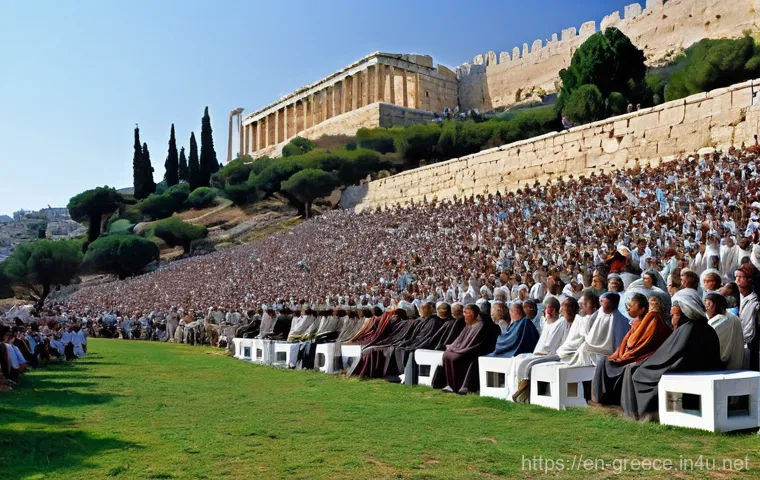
Another fundamental pillar of Athenian democracy was its judicial system, the *dikasteria*. These were large popular courts, with juries often numbering in the hundreds, sometimes even thousands, selected by lot from the citizen body. There were no professional judges or lawyers as we know them today; citizens argued their own cases or had friends speak on their behalf. This truly amateur, citizen-run judiciary aimed to prevent corruption and ensure that justice was administered by the people themselves. It was a fascinating system, though, I imagine, sometimes messy and highly influenced by rhetoric and public opinion rather than strict legal precedent. One of the most famous tools used to protect the democracy was *ostracism*, where citizens could vote to exile a prominent individual deemed a threat to the state for ten years, simply by scratching their name on a pottery shard (*ostrakon*). This served as a preventative measure, a way to defuse potential tyrants or overly ambitious politicians before they could cause real harm. When I reflect on it, the courts and ostracism highlight the Athenians’ deep concern for maintaining their nascent democracy against internal threats.
| Key Institution | Function and Significance | Key Features |
|---|---|---|
| Ekklesia (Assembly) | The primary legislative body, where all eligible male citizens could attend, debate, and vote on laws, war, and peace. | Direct democracy; thousands of citizens participated; met frequently. |
| Boule (Council of 500) | Prepared business for the Assembly, administered the city, and managed finances; members chosen by lot from the tribes. | Executive and administrative functions; members served for one year; crucial for daily governance. |
| Dikasteria (Courts) | Popular courts with large juries (hundreds or thousands) selected by lot; citizens argued their own cases. | Judicial branch; aimed for citizen-led justice; no professional judges/lawyers. |
| Strategos (Generals) | Ten military commanders, one from each tribe, elected annually; re-eligible for office. | Elected officials, reflecting need for expertise in military matters; significant political influence. |
| Ostracism | A procedure for exiling a citizen for ten years, voted on by the Assembly, to prevent potential tyranny. | Preventative measure against overly powerful individuals; name scratched on pottery shards. |
Daily Life Under the New
When we talk about Athenian democracy, it’s easy to focus solely on the political structures, the assemblies, and the councils. But for the average Athenian male citizen, the impact of *demokratia* permeated far beyond just casting a vote; it fundamentally reshaped their sense of self, their community, and their place in the world. Imagine being a free man in Athens and knowing that your voice, along with thousands of others, genuinely contributed to the laws governing your city. This wasn’t a passive citizenship; it was an active, demanding role that fostered a profound sense of civic responsibility and identity. The constant engagement in public life—whether debating in the agora, serving on a jury, or preparing for military service—meant that political life was deeply intertwined with daily existence. I’ve often mused about how different that must have felt compared to many modern societies where civic engagement can sometimes feel distant or perfunctory. It wasn’t just about rights; it was about duties and a shared commitment to the collective good of the polis. This profound cultural shift, driven by the democratic ethos, is what truly fascinates me about this incredible period in history.
Civic Identity: A Shared Purpose
With the advent of democracy, the concept of Athenian citizenship evolved into something much more robust and inclusive (for free men, at least). There was a powerful emphasis on civic virtue and the idea that the well-being of the individual was inextricably linked to the well-being of the state. Citizens were encouraged to participate actively, and neglecting one’s civic duties was looked down upon. Think about the pride and sense of belonging that must have come from knowing you were a vital part of a self-governing community, a community that valued your contribution. This wasn’t just a random collection of people; it was a collective enterprise, a shared destiny forged through active participation. This powerful civic identity fueled an explosion in cultural and intellectual life, leading to the flourishing of philosophy, drama, and art. My own feeling is that when people feel a true stake in their society, when they believe their voice matters, it unleashes an incredible wave of creativity and progress. It really highlights the symbiotic relationship between political freedom and cultural blossoming.
The Unsung Voices: Limitations of Athenian Democracy
Now, it’s crucial to acknowledge that for all its revolutionary advancements, Athenian democracy was far from perfect and certainly not universal by today’s standards. While it was truly ground-breaking for its time, its benefits were explicitly limited to adult male citizens. The vast majority of the population—women, foreign residents (*metics*), and enslaved people—were completely excluded from political participation. Women, for example, had no political rights and were largely confined to the domestic sphere. Metics contributed significantly to the Athenian economy and culture but were denied citizenship. And then there were the enslaved people, whose labor underpinned much of Athenian society, yet they had no rights whatsoever. It’s a sobering reminder that even the most progressive systems of the past carried profound inequalities. I always feel it’s important to look at history with clear eyes, appreciating the innovations while also recognizing the glaring limitations. Understanding these exclusions helps us appreciate how far the concept of universal suffrage has evolved and continues to evolve, even as we draw inspiration from Athens’ initial bold steps toward rule by the people.
The Echoes of Athens: Why It Still Matters Today
So, why should we, in our hyper-connected, technologically advanced 21st century, still care about a political experiment that unfolded over two millennia ago in a relatively small city-state? The simple truth is that the foundational principles laid down in ancient Athens continue to resonate deeply and shape our understanding of governance, civic duty, and individual rights. Every time we discuss voting, public accountability, or the importance of a free and open debate, we are, consciously or unconsciously, echoing the innovations born on the Pnyx. It’s truly remarkable how enduring these concepts have proven to be, proving that some ideas are simply timeless. I often find myself reflecting on the challenges they faced—how to balance individual freedom with collective good, how to prevent tyranny, and how to encourage active participation—and realizing that these aren’t just historical footnotes; they are ongoing struggles in democracies around the globe today. The Athenians gave us a blueprint, a starting point for what “rule by the people” could look like, and their journey, with all its triumphs and imperfections, offers invaluable lessons for anyone passionate about civic engagement and the future of democratic ideals. It’s a legacy that truly inspires me to think critically about our own societal structures.
Lessons for Modern Governance
The Athenian democratic experiment offers a treasure trove of lessons for modern governance, perhaps most importantly in the realm of citizen participation. While direct democracy on the scale of ancient Athens isn’t feasible for most large nation-states today, the underlying principle of active civic engagement remains vital. They taught us the value of public debate, the dangers of unchecked power, and the importance of holding leaders accountable. The concept of sortition, for example, selecting citizens by lot for public service, is even seeing a resurgence in some modern discussions about citizens’ assemblies and deliberative democracy, aimed at fostering more inclusive and less partisan decision-making. I think the key takeaway is that a healthy democracy isn’t just about elections; it’s about creating channels for citizens to feel truly invested in their government and to have their voices heard beyond just the ballot box. Their system, for all its flaws, pushed boundaries and encouraged a level of public discourse that we could still learn from, reminding us that constant vigilance and participation are the lifeblood of any thriving self-governing society. It really gets you thinking about how we can deepen our own civic involvement.
The Enduring Quest for “Rule by the People”
Ultimately, the story of Athenian democracy is a testament to humanity’s enduring quest for self-governance and the profound belief that ordinary people can, and should, have a say in their own destiny. It was a bold, imperfect, and utterly transformative undertaking that set the stage for much of the political thought that followed. Even with its exclusions, it fundamentally altered the conversation around power, moving it from the divine right of kings or the inherited privilege of aristocrats to the collective will of the citizenry. The journey from the early Athenian struggles to the *demokratia* of Cleisthenes reminds us that political systems are not static; they are the result of constant effort, negotiation, and adaptation. My hope is that by looking back at this incredible origin story, we can gain a fresh perspective on the value of our own democratic institutions and be inspired to protect and improve them. The legacy of Athens isn’t just history; it’s a living, breathing challenge for each generation to strive for a more just, equitable, and truly representative “rule by the people.”
Wrapping Things Up
And there you have it, folks – a whirlwind tour through the birth and evolution of a system that changed the world forever! From the brink of societal collapse under debt slavery to the revolutionary vision of Cleisthenes, the journey of Athenian democracy is truly a testament to humanity’s endless striving for a fairer, more representative way to live together. It’s easy to look back with modern eyes and point out its glaring imperfections, especially concerning the exclusion of women, foreigners, and enslaved people, but we absolutely can’t ignore the sheer audacity and brilliance of what they achieved. They dared to imagine a world where power resided not in the hands of a few, but in the collective will of many. For me, diving into this history isn’t just about dusty old texts; it’s about connecting with the very human desire for agency and a voice, a desire that still echoes profoundly in our own societies today. It really makes you appreciate the constant effort required to nurture and protect the democratic ideals we often take for granted, reminding us that these freedoms were hard-won and require continuous vigilance from every one of us.
Useful Insights to Keep in Mind
1. Always remember that even the most revolutionary ideas start small, often as a response to deep societal crises. Solon’s reforms weren’t full democracy, but they were the crucial pressure release valve that allowed Athens to avoid civil war and set the stage for later, more radical changes. It’s a powerful lesson in understanding that progress often comes in incremental, yet vital, steps rather than sudden, complete overhauls. This perspective helps me appreciate the small victories in any major societal shift, realizing that what seems minor today might be the cornerstone of tomorrow’s major breakthrough.
2. The concept of “sortition,” or selecting public officials by lot, was a cornerstone of Athenian democracy, designed to prevent corruption and ensure broad participation. While direct application is rare today, the underlying principle of involving everyday citizens in decision-making is gaining traction through modern citizens’ assemblies and deliberative forums. It makes you wonder if there are more creative ways we can empower ordinary people beyond just the ballot box, fostering a deeper sense of collective ownership and trust in our institutions. This ancient method truly challenged the idea that only the ‘experts’ should govern, and I think that’s a powerful message for us even now.
3. Athenian democracy thrived on active engagement; citizens were expected to participate, not just passively observe. This isn’t just a historical footnote; it’s a vital reminder for our contemporary democracies that their health depends on continuous civic involvement, from local community efforts to national debates. When you feel genuinely connected to the decision-making process, the whole concept of governance feels less abstract and much more personal, making you more likely to speak up and contribute. It’s a powerful lesson that democracy isn’t a spectator sport; it demands our active presence and passionate voices to truly flourish.
4. The limitations of Athenian democracy, particularly the exclusion of women, metics, and enslaved people, serve as a critical reminder that the fight for universal rights and representation is an ongoing journey. It highlights how important it is to continuously challenge existing norms and push for greater inclusion, ensuring that “rule by the people” truly means *all* the people. Looking back, it’s clear that even the most progressive societies of their time had massive blind spots, and that makes me think about what blind spots we might have today, pushing me to always advocate for more voices at the table.
5. The legacy of Athens isn’t just about ancient history; it’s a living inspiration for anyone interested in effective governance, citizen empowerment, and the pursuit of justice. The challenges they faced – balancing individual freedom with collective good, preventing tyranny, and fostering debate – are incredibly relevant in our world today. It reminds me that understanding the origins of these profound ideas helps us appreciate their value and fuels our own commitment to shaping a better future. There’s something incredibly motivating about knowing that these age-old struggles are part of a continuous human story, and we each play a part in writing the next chapter.
Key Takeaways from the Cradle of Democracy
To really distill it down, the story of Athenian democracy is one of transformative leadership, radical social engineering, and the enduring power of collective citizen engagement. It started as a desperate response to overwhelming societal pressures, evolving through the pragmatic reforms of Solon and culminating in Cleisthenes’ ingenious design that truly birthed “demokratia.” What I’ve always found most striking is how they managed to decentralize power and foster a profound sense of civic identity, even with its undeniable limitations for large segments of the population. Their system, with its direct assemblies, citizen juries, and elected generals, was a bold experiment that continues to offer invaluable lessons on governance, accountability, and the absolute necessity of an active citizenry. It fundamentally reshaped the very idea of who gets to govern and how, leaving an indelible mark on Western political thought. It’s a powerful reminder that while systems change, the core human desire for a voice and a stake in one’s own future remains a constant, driving force across millennia. This legacy continues to challenge and inspire us to build ever more inclusive and truly representative societies.
Frequently Asked Questions (FAQ) 📖
Q: So, how exactly did this “democracy” in ancient
A: thens actually work? Like, what did it look like in practice? A1: That’s an excellent question, and it’s something I always found incredibly intriguing!
When we talk about Athenian democracy, especially after Cleisthenes’ reforms, we’re really looking at a system that, while revolutionary, was also pretty unique compared to what we know today.
Imagine thousands of male citizens – yes, only free-born adult men, which is a crucial point we can’t forget – gathering regularly on a hillside called the Pnyx.
This was the Ecclesia, the primary assembly, and it was their job to vote on laws, declare war, and make all the major decisions for the city-state. It wasn’t like voting for a representative; they were the representatives, directly participating!
Then there was the Boule, or Council of 500, a smaller group chosen by lot from the ten tribes. Their role was to prepare the agenda for the Ecclesia, acting a bit like a steering committee.
And let’s not forget the courts, where citizens acted as jurors, often in very large panels, making decisions on legal cases. What I found particularly wild was the concept of “ostracism,” where once a year, they could vote to exile any citizen deemed too powerful or dangerous for ten years by writing their name on a pottery shard (an ostrakon).
It was a direct, hands-on, and sometimes chaotic system, but it truly put the power, albeit limited, into the hands of the people in a way that was unheard of before.
It makes you realize how much trust they placed in the collective wisdom, even with all its flaws!
Q: You mentioned influential figures like Solon and Cleisthenes. Can you tell us a bit more about what they actually did to kickstart this whole democracy thing?
A: Absolutely! These guys were absolute game-changers, and their stories really highlight how societal pressures can lead to incredible innovation. When I first dove into this, I was struck by how much courage it must have taken to challenge the entrenched powers of their time.
First up, Solon, around 594 B.C.E., was a sort of foundational reformer. Athens was facing massive social unrest – think debt slavery, where people were literally selling themselves or their families into bondage because of their debts.
Solon stepped in with radical reforms: he abolished debt slavery, bought back enslaved Athenians, and reformed the legal code. He also restructured the social classes based on wealth, not just birth, and created a popular assembly (though it had less power than Cleisthenes’ later version) and a new council.
While not full democracy, he definitely laid the crucial groundwork, easing social tensions and introducing the idea that more citizens should have a say.
He was like the wise elder who set the stage for bigger things. Then comes Cleisthenes, around 507 B.C.E., who I think of as the true architect of demokratia.
He took Solon’s foundation and built a skyscraper on it! He essentially reorganized Athenian society not along traditional family or clan lines, which were often manipulated by aristocrats, but into ten new tribes based on geography.
This seemingly administrative change was brilliant because it broke up old power bases and encouraged loyalty to the polis (city-state) itself. He expanded the Boule to 500 members (50 from each new tribe) and strengthened the Ecclesia, ensuring a much broader base of male citizens could participate actively.
He’s often credited with truly establishing “rule by the people.” It’s mind-blowing how a single individual’s vision could literally restructure a society and give birth to such a monumental political idea!
Q: Given its limitations (like excluding women and slaves), why do we still talk about ancient
A: thenian democracy today? What’s its lasting impact? A3: This is probably one of the most important questions, and it’s something that gets you thinking about our own societies!
While it’s absolutely true that Athenian democracy was far from perfect – its exclusion of women, slaves, and foreigners is a glaring flaw we cannot overlook – its lasting impact is undeniable and genuinely profound.
When I reflect on it, I realize it wasn’t just what they did, but the idea they sparked that truly echoed through history. Its enduring legacy lies in establishing the fundamental concept that ordinary citizens can and should have a voice in their own governance.
Before Athens, the default was kings, tyrants, or oligarchs. Athens dared to suggest something different: collective decision-making, direct participation, and the idea of “isonomia” – equality before the law.
This principle, even if not fully realized in practice, became a beacon. Think about it: the very notion of a constitution, of citizens actively debating and voting on laws, of holding public officials accountable, all have roots in this ancient system.
For us today, it serves as both an inspiration and a cautionary tale. It inspires us to continually strive for more inclusive and representative forms of government, reminding us that democracy is an ongoing process, not a finished product.
And it cautions us to examine who is excluded from power, pushing us to challenge our own biases and expand the circle of participation. It reminds me that even a flawed beginning can light a path for millennia, urging us to keep refining and fighting for the “rule by the people” in its truest, most encompassing sense.
It’s a conversation starter that never really ends!
📚 References
➤ 6. Daily Life Under the New When we talk about Athenian democracy, it’s easy to focus solely on the political structures, the assemblies, and the councils.
But for the average Athenian male citizen, the impact of *demokratia* permeated far beyond just casting a vote; it fundamentally reshaped their sense of self, their community, and their place in the world.
Imagine being a free man in Athens and knowing that your voice, along with thousands of others, genuinely contributed to the laws governing your city.
This wasn’t a passive citizenship; it was an active, demanding role that fostered a profound sense of civic responsibility and identity. The constant engagement in public life—whether debating in the agora, serving on a jury, or preparing for military service—meant that political life was deeply intertwined with daily existence.
I’ve often mused about how different that must have felt compared to many modern societies where civic engagement can sometimes feel distant or perfunctory.
It wasn’t just about rights; it was about duties and a shared commitment to the collective good of the polis. This profound cultural shift, driven by the democratic ethos, is what truly fascinates me about this incredible period in history.
– 6. Daily Life Under the New When we talk about Athenian democracy, it’s easy to focus solely on the political structures, the assemblies, and the councils.
But for the average Athenian male citizen, the impact of *demokratia* permeated far beyond just casting a vote; it fundamentally reshaped their sense of self, their community, and their place in the world.
Imagine being a free man in Athens and knowing that your voice, along with thousands of others, genuinely contributed to the laws governing your city.
This wasn’t a passive citizenship; it was an active, demanding role that fostered a profound sense of civic responsibility and identity. The constant engagement in public life—whether debating in the agora, serving on a jury, or preparing for military service—meant that political life was deeply intertwined with daily existence.
I’ve often mused about how different that must have felt compared to many modern societies where civic engagement can sometimes feel distant or perfunctory.
It wasn’t just about rights; it was about duties and a shared commitment to the collective good of the polis. This profound cultural shift, driven by the democratic ethos, is what truly fascinates me about this incredible period in history.
➤ The Unsung Voices: Limitations of Athenian Democracy
– The Unsung Voices: Limitations of Athenian Democracy
➤ Now, it’s crucial to acknowledge that for all its revolutionary advancements, Athenian democracy was far from perfect and certainly not universal by today’s standards.
While it was truly ground-breaking for its time, its benefits were explicitly limited to adult male citizens. The vast majority of the population—women, foreign residents (*metics*), and enslaved people—were completely excluded from political participation.
Women, for example, had no political rights and were largely confined to the domestic sphere. Metics contributed significantly to the Athenian economy and culture but were denied citizenship.
And then there were the enslaved people, whose labor underpinned much of Athenian society, yet they had no rights whatsoever. It’s a sobering reminder that even the most progressive systems of the past carried profound inequalities.
I always feel it’s important to look at history with clear eyes, appreciating the innovations while also recognizing the glaring limitations. Understanding these exclusions helps us appreciate how far the concept of universal suffrage has evolved and continues to evolve, even as we draw inspiration from Athens’ initial bold steps toward rule by the people.
– Now, it’s crucial to acknowledge that for all its revolutionary advancements, Athenian democracy was far from perfect and certainly not universal by today’s standards.
While it was truly ground-breaking for its time, its benefits were explicitly limited to adult male citizens. The vast majority of the population—women, foreign residents (*metics*), and enslaved people—were completely excluded from political participation.
Women, for example, had no political rights and were largely confined to the domestic sphere. Metics contributed significantly to the Athenian economy and culture but were denied citizenship.
And then there were the enslaved people, whose labor underpinned much of Athenian society, yet they had no rights whatsoever. It’s a sobering reminder that even the most progressive systems of the past carried profound inequalities.
I always feel it’s important to look at history with clear eyes, appreciating the innovations while also recognizing the glaring limitations. Understanding these exclusions helps us appreciate how far the concept of universal suffrage has evolved and continues to evolve, even as we draw inspiration from Athens’ initial bold steps toward rule by the people.
➤ The Echoes of Athens: Why It Still Matters Today
– The Echoes of Athens: Why It Still Matters Today
➤ So, why should we, in our hyper-connected, technologically advanced 21st century, still care about a political experiment that unfolded over two millennia ago in a relatively small city-state?
The simple truth is that the foundational principles laid down in ancient Athens continue to resonate deeply and shape our understanding of governance, civic duty, and individual rights.
Every time we discuss voting, public accountability, or the importance of a free and open debate, we are, consciously or unconsciously, echoing the innovations born on the Pnyx.
It’s truly remarkable how enduring these concepts have proven to be, proving that some ideas are simply timeless. I often find myself reflecting on the challenges they faced—how to balance individual freedom with collective good, how to prevent tyranny, and how to encourage active participation—and realizing that these aren’t just historical footnotes; they are ongoing struggles in democracies around the globe today.
The Athenians gave us a blueprint, a starting point for what “rule by the people” could look like, and their journey, with all its triumphs and imperfections, offers invaluable lessons for anyone passionate about civic engagement and the future of democratic ideals.
It’s a legacy that truly inspires me to think critically about our own societal structures.
– So, why should we, in our hyper-connected, technologically advanced 21st century, still care about a political experiment that unfolded over two millennia ago in a relatively small city-state?
The simple truth is that the foundational principles laid down in ancient Athens continue to resonate deeply and shape our understanding of governance, civic duty, and individual rights.
Every time we discuss voting, public accountability, or the importance of a free and open debate, we are, consciously or unconsciously, echoing the innovations born on the Pnyx.
It’s truly remarkable how enduring these concepts have proven to be, proving that some ideas are simply timeless. I often find myself reflecting on the challenges they faced—how to balance individual freedom with collective good, how to prevent tyranny, and how to encourage active participation—and realizing that these aren’t just historical footnotes; they are ongoing struggles in democracies around the globe today.
The Athenians gave us a blueprint, a starting point for what “rule by the people” could look like, and their journey, with all its triumphs and imperfections, offers invaluable lessons for anyone passionate about civic engagement and the future of democratic ideals.
It’s a legacy that truly inspires me to think critically about our own societal structures.
➤ The Athenian democratic experiment offers a treasure trove of lessons for modern governance, perhaps most importantly in the realm of citizen participation.
While direct democracy on the scale of ancient Athens isn’t feasible for most large nation-states today, the underlying principle of active civic engagement remains vital.
They taught us the value of public debate, the dangers of unchecked power, and the importance of holding leaders accountable. The concept of sortition, for example, selecting citizens by lot for public service, is even seeing a resurgence in some modern discussions about citizens’ assemblies and deliberative democracy, aimed at fostering more inclusive and less partisan decision-making.
I think the key takeaway is that a healthy democracy isn’t just about elections; it’s about creating channels for citizens to feel truly invested in their government and to have their voices heard beyond just the ballot box.
Their system, for all its flaws, pushed boundaries and encouraged a level of public discourse that we could still learn from, reminding us that constant vigilance and participation are the lifeblood of any thriving self-governing society.
It really gets you thinking about how we can deepen our own civic involvement.
– The Athenian democratic experiment offers a treasure trove of lessons for modern governance, perhaps most importantly in the realm of citizen participation.
While direct democracy on the scale of ancient Athens isn’t feasible for most large nation-states today, the underlying principle of active civic engagement remains vital.
They taught us the value of public debate, the dangers of unchecked power, and the importance of holding leaders accountable. The concept of sortition, for example, selecting citizens by lot for public service, is even seeing a resurgence in some modern discussions about citizens’ assemblies and deliberative democracy, aimed at fostering more inclusive and less partisan decision-making.
I think the key takeaway is that a healthy democracy isn’t just about elections; it’s about creating channels for citizens to feel truly invested in their government and to have their voices heard beyond just the ballot box.
Their system, for all its flaws, pushed boundaries and encouraged a level of public discourse that we could still learn from, reminding us that constant vigilance and participation are the lifeblood of any thriving self-governing society.
It really gets you thinking about how we can deepen our own civic involvement.